Vaccines Protect Communities
Community Immunity
How do vaccines protect everyone?
When you get vaccinated, you protect more than yourself. You also help protect the people around you, including those who can’t be vaccinated. This is called community immunity, also known as herd immunity.
Community immunity happens when enough people in a community are protected against a disease that it has a hard time spreading. Germs need people to infect so they can move from person to person. When most people are vaccinated, the germ runs into a wall of protected people and has nowhere to go.
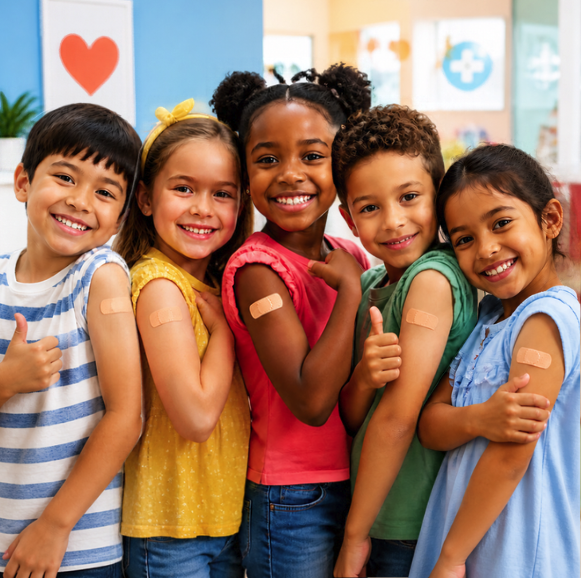
Some people can’t be vaccinated, or their bodies may not respond as well to vaccines. Community immunity helps protect:
- Newborns and babies who are too young for some vaccines
- People getting treatment for cancer
- People with weakened immune systems, such as organ transplant recipients
- Older adults whose immune systems may not respond as strongly to vaccines
- People with severe allergies to components in vaccines and can not be vaccinated
- People who many not have built full immunity to their vaccines
For these people, the vaccinated people around them are their best defense.
How does it work?
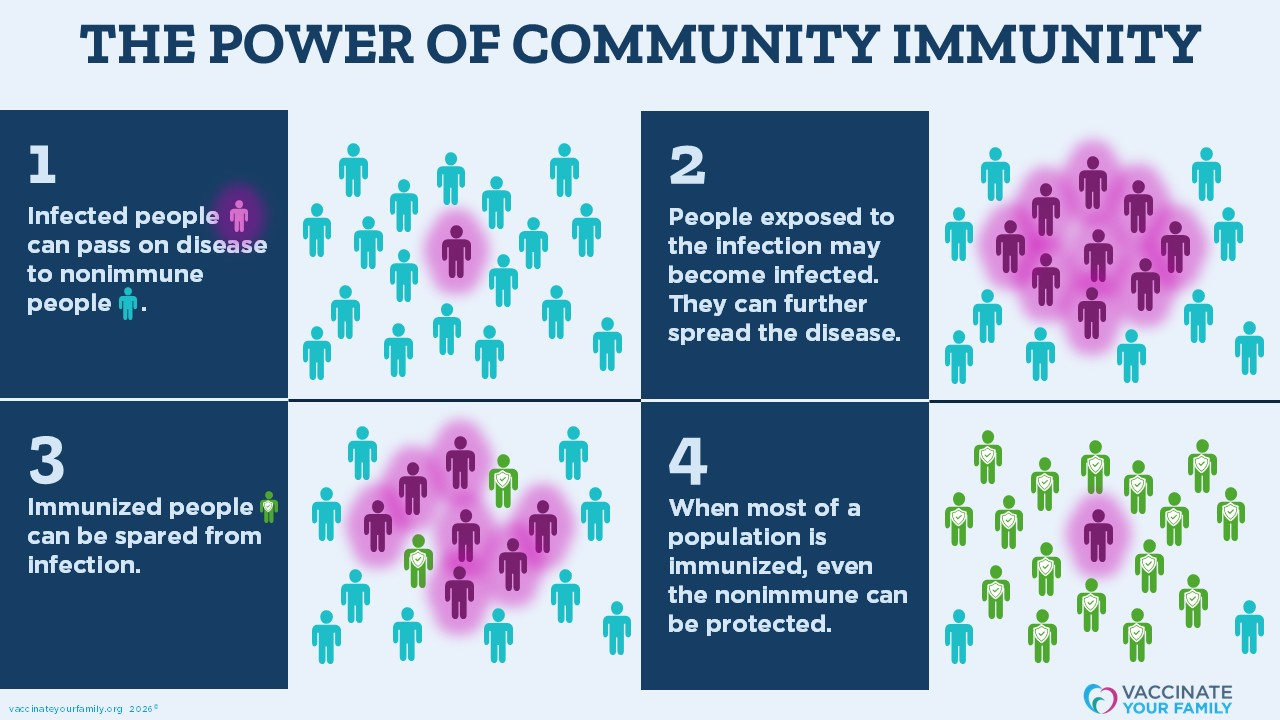
Diseases spread from person to person. When someone who is sick comes into contact with people who aren’t protected, the germ can pass to them and make them sick. Each newly infected person can then spread it to others, and the disease moves quickly through the community.
Vaccinated people act like a barrier. When the germ reaches someone who is vaccinated, it usually won’t make them sick, so they don’t pass it on to others around them. When most people in a community are vaccinated, the germ keeps encountering protected people and has fewer places to go. That means even people who aren’t vaccinated, like newborns or people with weakened immune systems, are much less likely to be exposed.
The graphic below shows how this works, step by step.
What happens when vaccination rates drop?
When fewer people are vaccinated, gaps open up in a community’s protection. Diseases can slip through those gaps and spread quickly, often reaching the people who are most vulnerable first. That’s why outbreaks of diseases like measles are happening again in communities where vaccination rates have fallen.
What can you do?
The best way to support community immunity is to make sure you and your family are up to date on recommended vaccines. Every person who gets vaccinated helps make the whole community stronger.
Find out more about why it’s important to vaccinate yourself and your loved ones.