Rotavirus
What is Rotavirus?
Rotavirus is a viral infection that causes severe diarrhea and vomiting in young children. If left untreated, it can lead to dehydration, which can be life-threatening.
Before the introduction of the rotavirus vaccine in the United States in 2006, nearly every child was infected with the virus by age 5. Between 2006 and 2019 rotavirus vaccine prevented an estimated 140,000 deaths among children worldwide.
On this page, you can explore how rotavirus spreads, whether rotavirus is seasonal, what the symptoms are, how long someone is contagious, and how to prevent rotavirus.
Between 2006 and 2019 rotavirus vaccine prevented an estimated 140,000 deaths among children worldwide.
How does rotavirus spread?
Rotavirus spreads easily through close contact, particularly among young children, their families, and in places like hospitals and childcare centers.
People infected with rotavirus shed the virus in their stool (poop), allowing it to contaminate the environment and potentially infect others.
You can contract the virus typically through:
- Putting unwashed hands, contaminated with stool, into your mouth
- Touching surfaces or objects contaminated with the virus, then touching your mouth
- Eating food that has been contaminated with the virus
- Drinking water or other beverages contaminated with the virus
Rotavirus occurs year-round, but there are seasonal peaks, with children most likely to contract the virus during the winter and spring months (January through June).
Since the introduction of the rotavirus vaccine in 2006, the seasonal pattern has changed. Rotavirus seasons are now shorter and less severe, and significant outbreaks tend to happen every other year rather than every single year as they did before the vaccine.

Before there was a vaccine, rotavirus resulted in more than 200,000 emergency room visits, 55,000 to 70,000 hospitalizations, and 20 to 60 deaths in the U.S. annually.
What are the symptoms of rotavirus?
After a child has been infected with rotavirus, it takes about two days for symptoms to appear. Symptoms may include:
- Dehydration (loss of body fluids) which may look like decreased urination, dry mouth and throat, or crying with few or no tears
- Vomiting
- Severe watery diarrhea
- Feeling dizzy when standing up
- Stomach pain
- Fever
- Loss of appetite
- Unusual sleepiness or fussiness
In adults who are otherwise healthy, a rotavirus infection may cause only mild signs and symptoms or none at all (asymptomatic).
How long is someone contagious with rotavirus?
A person infected with rotavirus begins shedding the virus in their stool about two days before symptoms appear and can continue spreading it for up to 10 days after symptoms begin. This means someone can spread rotavirus before they even know they are sick.
How do you prevent rotavirus?
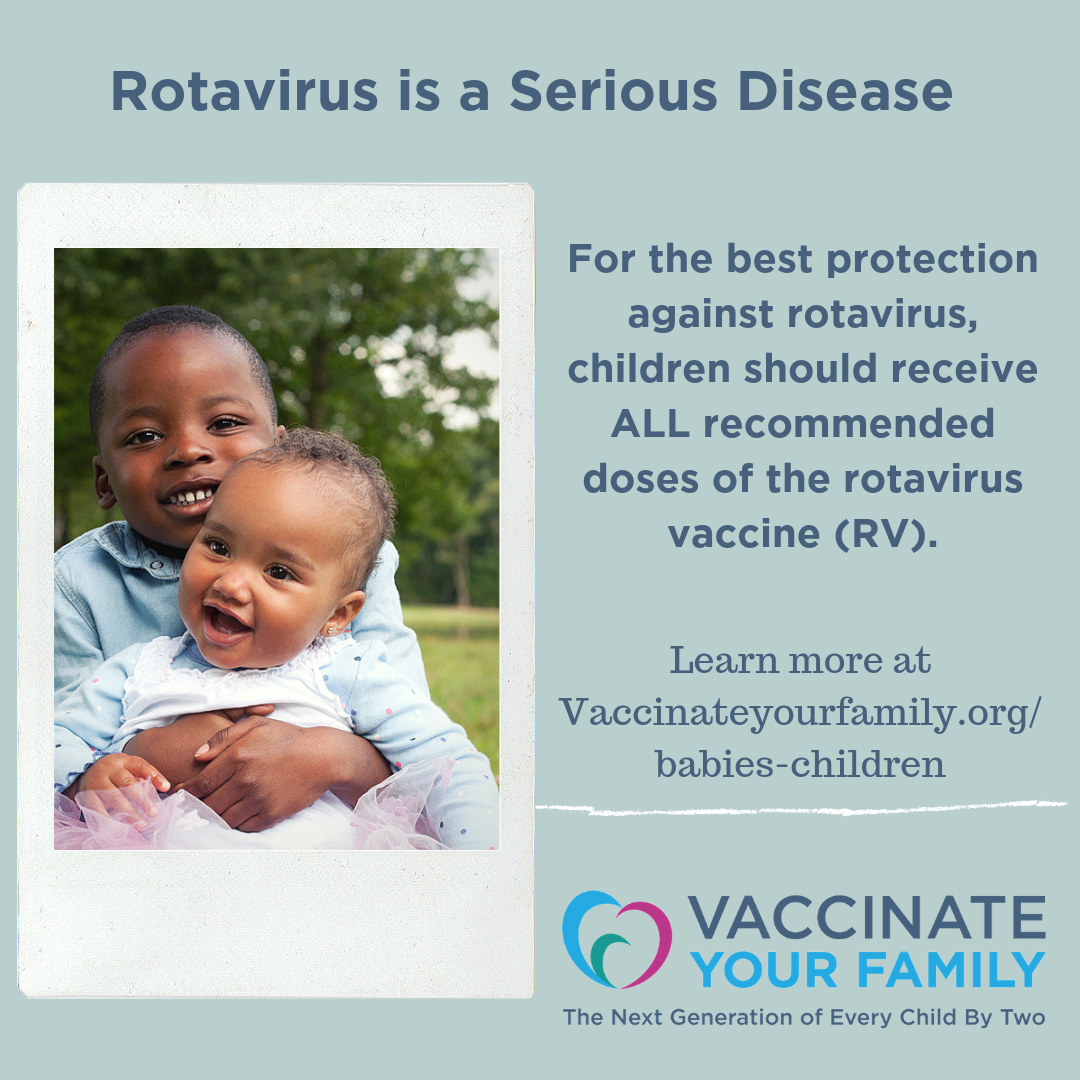
For the best protection against rotavirus, children need to receive all recommended doses (2 or 3 doses, depending on vaccine brand) of the rotavirus vaccine.
Your child needs doses at:
- 2 months of age (before 15 months of age)
- 4 months of age
- 6 months of age (if needed due to the brand of vaccine)
All doses should be completed by 8 months of age.
Watch this video to see how a family expresses deep regret that their children’s suffering could have been prevented with a vaccine.
Rotavirus: A Family's Story
Immunization Schedules
To ensure that your family is up to date on their vaccines, view or download the immunization schedules and talk to your healthcare provider.