Congenital Measles
What is congenital measles?
“Congenital” means a condition that is present at birth. A baby is considered to have congenital measles if there are symptoms at birth or a lab test showing infection in the first 10 days of life and the mother had measles during pregnancy.
Measles can spread to the baby through the mother’s blood, across the placenta while she is sick with measles.

Congenital Measles Q&A
How is congenital measles different from a newborn getting measles after birth?
Measles usually takes about 10 days to cause illness after someone is exposed. So, a baby who is sick in the first 10 days of life was most likely infected before birth. A newborn can also catch measles after birth from someone nearby who is contagious. Symptoms that start more than 10 days after birth usually point to an infection that came after birth.
What are the symptoms of congenital measles?
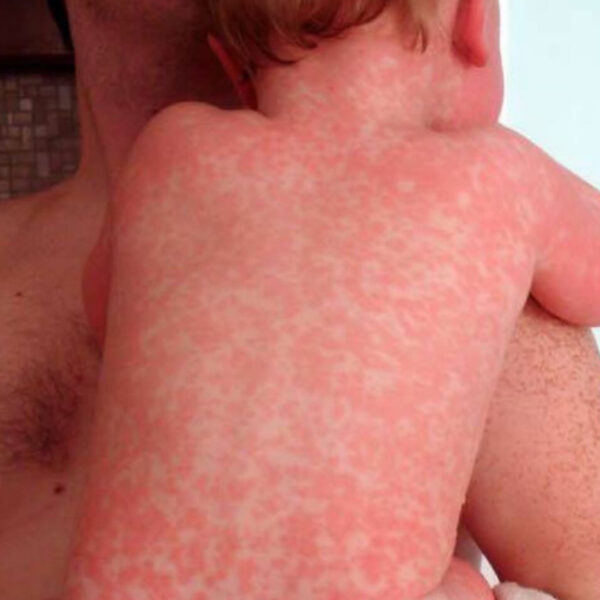
When most people think of measles, they think of a rash. But for infants less than 10 days old infected with measles, the symptoms may look different.
Some babies have no symptoms. Others develop the classic rash. Fever, rash, and jaundice (yellowing of the skin) are the most common signs. Pneumonia, low platelet counts (platelets help blood clot), and brain and nerve problems can also occur.
Some infants become critically ill and die.
Symptoms can look different in newborns because their immune systems are still developing. Antibodies the mother passes to the baby before birth may also lessen the symptoms. As a result, the rash may look unusual, show up late, or not appear at all.
How is congenital measles diagosed?
Because symptoms vary greatly, laboratory testing is very important. Doctors usually test a swab from the baby’s nose or throat, and sometimes the urine, for measles virus. A blood test can also look for measles antibodies made by the baby’s body. Babies born within two weeks of the mother’s measles rash should be tested even if they seem healthy.
Is there a treatment for congenital measles?
There is no medicine to cure measles. Care focuses on supporting the baby while their body fights the infection. The American Academy of Pediatrics (AAP) recommends vitamin A for all babies with confirmed congenital measles, especially those with symptoms. Babies born within two weeks of the mother’s measles rash should also be considered for antibody treatment that may help prevent severe illness.
Is congenital measles preventable?
Yes! The measles, mumps, rubella (MMR) vaccine is highly effective at preventing measles. Vaccination is not recommended during pregnancy, so if you are planning to become pregnant, make sure you are up to date on your MMR vaccinations.
How dangerous is congenital measles?
Congenital measles can be very dangerous. Before measles antibody treatment was available, up to 30 percent of babies with congenital measles died, according to historical reports. Babies with congenital measles also have a higher risk of subacute sclerosing panencephalitis (SSPE), the rare, fatal brain disease that can develop years after a person is infected with measles. In babies infected with congenital measles, SSPE may appear within months to a few years rather than the usual 7–10 years if the child had caught measles after birth.
What is the risk of measles during pregnancy?
Measles can cause serious illness in the mother, such as pneumonia. Having measles during pregnancy can also increase the risk of pregnancy loss, premature delivery, and low birth weight. The evidence does not show that measles during pregnancy causes birth defects for the baby.
How often does a measles infection pass to the baby during pregnancy?
Any baby whose mother had measles during pregnancy, at any stage, is considered exposed. If a baby is born more than two weeks after the mother’s measles rash started, they are likely not contagious at birth because the mother’s antibodies were also passed to the infant through the placenta and help control the virus. Babies born very early (before about 32 weeks) get fewer of these antibodies, so they may need extra precautions.
Being exposed to measles in the womb can still cause problems later in life, like SSPE. This is true even if the infection came and went before birth. Babies exposed to measles in the womb need long-term follow-up with their doctor.
If my baby had measles in the womb or as an infant, what should I monitor going forward?
For a child known to have been exposed in the womb to measles, the AAP lists seizures, loss of skills the child had already gained, and learning difficulties in school-age children as potential later-in-life risks. These can be early signs of SSPE. No treatment has been proven to prevent serious brain-related outcomes, though some antiviral and immune-modulating treatments have been tried. Your child’s doctor should talk with you about these risks and keep watching for signs over time.
Can measles be spread through breastmilk?
The AAP says the baby can still be fed the mother’s expressed breast milk, because measles does not spread through breast milk.
How can congenital measles be prevented?
- If you are planning to get pregnant, talk to your provider about your previous vaccination and, if needed, get the MMR vaccine before pregnancy. The vaccine is not recommended during pregnancy. Wait at least four weeks after getting the vaccine before becoming pregnant.
- If you’re pregnant, not immune, and exposed to measles, call your healthcare provider right away. Do not go into your provider’s office in person. You may be able to get preventative treatment that can help you and your baby. This treatment works best if given within 6 days after exposure.
- If you live with someone or are frequently around pregnant people, make sure you are up to date on the MMR vaccine. Measles is highly contagious, and protecting yourself also helps protect your community. The MMR vaccine is safe for people who live with someone who is pregnant.
- Exposed babies born within 2 weeks of the mother’s measles rash should be considered to receive preventive antibody treatment.
Resources
- CDC: Measles During Pregnancy
- AAP Red Book: Congenital Measles FAQ
- MotherToBaby: Measles Protection Decision Tree
Immunization Schedules
To ensure that your family is up to date on their vaccines, view or download the immunization schedules and talk to your healthcare provider.