Mumps
What is mumps?
Mumps is a contagious viral disease spread through coughing, sneezing, and close contact with infected individuals, including regular conversation. The most noticeable symptom is swelling of the salivary glands, which causes the cheeks to puff out.
On this page, you can explore how mumps spreads, who is at risk, what the symptoms are, long-term health effects, how to prevent mumps, and information on mumps outbreaks.
before symptoms begin is when mumps is most contagious.
How does mumps spread?
Mumps is a viral infection that spreads through direct contact with saliva or respiratory droplets from the mouth, nose, or throat. The virus is transmitted through:
- Coughing, sneezing, or talking
- Sharing items contaminated with saliva, such as water bottles or cups
- Engaging in close-contact activities, like playing sports, dancing, or kissing
A person with mumps is contagious from 2 days before through 5 days after the onset of salivary gland swelling. This means people can spread the virus before they even know they are sick. People without any symptoms can also spread mumps to others.
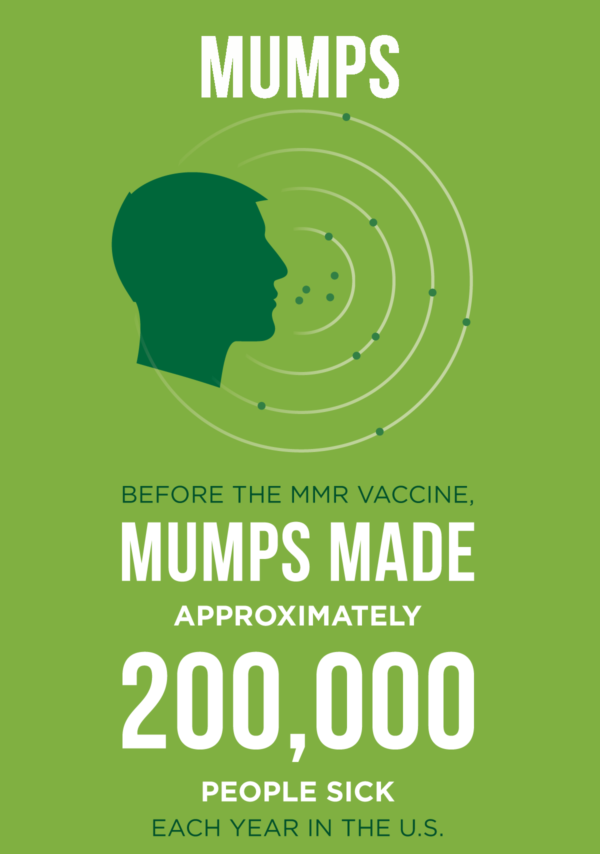
Anyone who is not vaccinated against mumps is at risk. People in close-contact settings, such as school children, college students, and healthcare workers, are more likely to contract and spread the disease.
Additionally, traveling to areas outside the U.S. where mumps is more common increases the risk of infection.

People are contagious starting a few days before their salivary glands begin to swell and can remain contagious for up to 5 days after the swelling begins.
What are the symptoms of mumps?
Some children infected with the mumps virus have either no signs or symptoms or very mild ones. When signs and symptoms do develop, they usually appear about 16 to 18 days after exposure to the virus and may include:
- Painful, swollen glands under the ear or jaw
- Fever
- Headache
- Fatigue
- Loss of appetite
- Muscle aches
However, up to one-third of people with mumps have no symptoms at all, and some experience only mild respiratory symptoms, yet they can still spread the virus to others.

Are there any long-term health effects associated with mumps?
Although mumps is typically a mild illness, it can lead to complications such as encephalitis (swelling of the brain) and meningitis (swelling of the membranes surrounding the brain and spinal cord) and deafness. Additionally, about one in four teenage or adult men with mumps may experience painful swelling of the testicles, which can lead to testicular atrophy and, in some cases, reduced fertility or infertility.
How can I prevent mumps?
Vaccination provides the best protection against mumps. There are two mumps-containing vaccines available in the U.S. The MMR vaccine protects against measles, mumps, and rubella. The MMRV vaccine protects against measles, mumps, rubella, and varicella (chickenpox).

Babies and Children
For the best protection against mumps, the AAP recommends that children get two doses of MMR or two doses of MMRV vaccine:
- The first dose at 12 through 15 months of age
- The second dose at 4 through 6 years of age
Your child’s healthcare provider can help decide whether your child needs the MMRV or MMR vaccine.

Teens/Young Adults
It’s recommended that students at post-high school educational institutions who do not have evidence of immunity to mumps get two doses of MMR vaccine, separated by at least 28 days.

Adults
Adults born before 1957 have probably been exposed to mumps virus and are likely immune.
Adults who do not have evidence of immunity should get at least one dose of MMR vaccine.
Adults who are at higher risk, including international travelers and household contacts of immunocompromised people, should receive a two-dose series at least 4 weeks apart if they have no evidence of immunity to mumps.
How common are mumps outbreaks?
Outbreaks in the U.S. continue to put people at risk of mumps and its complications. To find information about mumps outbreaks and to view the number of cases/years, see CDC’s Mumps Cases and Outbreaks web page.
Immunization Schedules
To ensure that your family is up to date on their vaccines, view or download the childhood and adult immunization schedules and talk to your healthcare provider.
Mumps remain a common disease in many parts of the world. Anyone who is not protected against mumps is at risk of infection when traveling internationally. The following mumps protection is recommended before international travel:
- Infants aged 6 to 11 months should receive one dose of the MMR vaccine. This dose does not count toward the recommended two-dose series. The child will still need the two doses following the recommended schedule.
- Children 12 months and older should receive two doses of the MMR or MMRV vaccine, separated by at least 28 days.
- Teenagers and adults without proof of immunity to mumps should receive two doses of the MMR vaccine, separated by at least 28 days.
The MMR vaccine is not effective in protecting individuals who have recently been infected with mumps. However, getting vaccinated after exposure is not harmful and may help prevent the disease if the person is later re-exposed.