What Parents Need to Know About the 2026 Childhood Immunization Schedule
Each year, the American Academy of Pediatrics (AAP) releases an updated childhood immunization schedule to give families clear guidance on recommended vaccines to protect children from preventable diseases.
The CDC also releases an annual immunization schedule. The 2026 schedule from the CDC includes changes in how some vaccines are categorized, despite no evidence to support the adjusted schedule. America’s pediatricians and providers, after careful review of the data, released a 2026 immunization schedule that is backed by evidence and is consistent with the 2025 schedule.
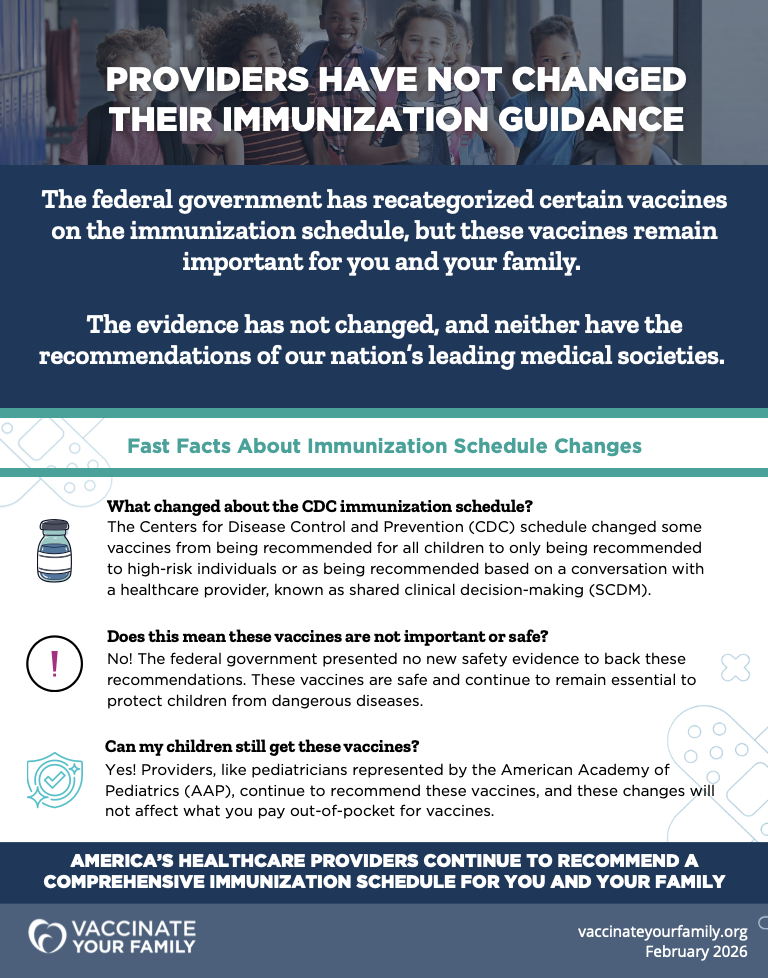
Click the image to download this printable guide for parents explaining the 2026 immunization schedules.
Twelve national organizations representing more than 1 million clinicians, physicians, pharmacists and other pediatric health care professionals agree with the AAP immunization schedule. These groups endorse it:
- American Academy of Family Physicians
- American College of Nurse Midwives
- American College of Obstetricians and Gynecologists
- American Medical Association
- American Pharmacists Association
- Council of Medical Specialty Societies
- Infectious Diseases Society of America
- National Association of Pediatric Nurse Practitioners
- National Medical Association
- Pediatric Infectious Diseases Society
- Pediatric Pharmacy Association
- Society for Adolescent Health and Medicine
The most important message for parents is clear: your children still need the same vaccines, and healthcare providers continue to strongly recommend them.
What Changed—and What Didn’t
The 2026 immunization schedule from the CDC re-categorized some vaccines. Instead of being listed as recommended for all children, a few have been recommended for specific high-risk groups or identified as “shared clinical decision-making” (SCDM) vaccines. SCDM simply means you and your child’s healthcare provider can discuss whether your child should receive a particular vaccine based on their unique health needs.
These are administrative changes, not scientific ones. No new safety concerns have been identified, and the evidence supporting these vaccines remains unchanged. Pediatricians continue to recommend the full set of childhood vaccines because they are proven, safe, and essential for preventing serious illnesses.
Your Child Can Still Receive All Recommended Vaccines
Even with these federal categorization updates, nothing prevents your child from receiving the full, recommended series of vaccinations. Healthcare providers—including pediatricians, family physicians, and pharmacists—are continuing to offer these vaccines as part of routine care.
Just as important, there will be no change to what families pay. All vaccines recommended by healthcare providers are still covered by insurance and by the federal Vaccines for Children (VFC) program, which provides free vaccines to eligible families.
Why This Matters
Children encounter germs every day—at childcare, at school, on playgrounds, and even during meals or family activities.
The threat of vaccine-preventable diseases is real today: there are active, ongoing measles outbreaks in the United States right now, and we’re in the midst of a severe flu and respiratory disease season.
Choosing to vaccinate on time gives your child strong protection during the years they are most vulnerable. Delaying a vaccine can leave them exposed to dangerous infections longer than necessary.
Talk With Your Healthcare Provider
If you have questions about the vaccines your child needs, your pediatrician or other trusted healthcare provider is the best place to start. Consider asking:
- Which vaccines does my child need at their next visit?
- Do you recommend this vaccine for my child, and why?
- What are the risks of delaying a recommended vaccine?
- How does this vaccine help protect my child’s long-term health?
Recommendations, including those from CDC, are not mandates. School entry requirements are set at the state level, and ultimately the choice to vaccinate has always been that of parents, together with a trusted healthcare professional.
Access the 2026 Childhood Immunization Schedule here.