Vaccinating Pets to Protect Our Families
Rabies Prevention for our Fur Babies
By Jennifer McQuiston, DVM, retired Epidemiologist, Practicing Veterinarian
After retiring with a full career at the Centers for Disease Control and Prevention (CDC), Dr. Jennifer McQuiston went back to practicing veterinarian medicine. She has first-hand experience with families unsure about vaccination for their pets. Pets are family, too, and by giving them the American Veterinary Medical Association’s (AVMA) recommended vaccines, you can protect them, and yourselves.
Dr. McQuiston shared her perspective, using pet rabies vaccination as an important example, with Vaccinate Your Family below.
There’s a reason we call them Fur Babies.
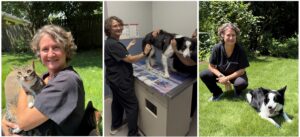
Dr. McQuiston and her own pets. One of her dogs was due for routine vaccinations, including rabies.
Dogs and cats are a vital part of our families. They share our homes. Mine even sleep on my bed! And because we share such a close relationship, it’s important to make sure our pets don’t get diseases that could make them sick or that they could spread to people. This is especially true for rabies, a deadly virus that spreads through bites from infected animals.
Prior to the 1950’s, dogs were the most common animal to have rabies in the United States. Dozens of people died of rabies every year following bites from infected dogs. Thanks to historic vaccination efforts in the United States, the canine rabies virus was eliminated from circulation by 2008. Because there are state and local laws and recommendations requiring vaccination of dogs and cats across the country, human cases are now rare in the U.S. Those policies were put in place because exposure to rabies puts animals and humans at significant risk.
I am a veterinarian who treats dogs and cats, and I also worked on rabies as an epidemiologist, also known as a disease detective, for many years. My role was to identify infectious disease trends and work with other scientists nationally and globally to protect human health. Now, when someone comes into my veterinary office after a dog or cat bite, the first question I ask is, “Is their rabies vaccine current?”
Rabies still poses a risk to animal and human health, even for “indoor only” pets.
Rabies still circulates among wildlife like raccoons, skunks, foxes, and bats in the U.S., and our pets can encounter infected wildlife in our yards. Even strictly indoor animals need vaccination. Let’s face it – indoor pets can slip outside when we least expect it, and it’s important they are protected if that happens. Bats are commonly diagnosed with rabies in the U.S., and these tiny, winged creatures can find their way inside homes where dogs and cats interact with them.
Rabies has a fatality rate near 100%—there is no treatment for rabies once clinical signs develop, and preventing infection through vaccination is the only option we have.
Vaccination of pets against rabies is the most important tool we have to protect humans. For people bitten by a rabid animal, the required multi-dose vaccine series for survival is both more costly and complex than simply vaccinating our pets. In the U.S., each year, approximately 100,000 people must receive this vaccine due to a rabies exposure.
In parts of the world without access to vaccines for dogs, tens of thousands of people still die every year from rabies spread by dog bites. When rates of canine rabies vaccination drop due to lack of funding, coordinated tracking with data, or vaccine supply issues, we see a resulting rise in human cases.
We all want to keep our pets safe and healthy. Vaccination, a tool provided to over 91 million cats and dogs and more than ten million wild animals each year in the U.S., has demonstrated that the side effects and risks of rabies vaccination is minimal. There are multiple types of vaccines with different timing options for pets available, meaning there is flexibility and choice for families on what makes sense for them.
We love our pets. And we love our families. Ensuring our dogs and cats stay current on their rabies vaccine is the best way to keep our fur babies and our human babies safe.